
On January 3, 2026, United States forces carried out an unprecedented operation that forcibly removed Nicolás Maduro and his wife, Cilia Flores, from Venezuelan soil. For a country that had spent over a decade under his rule, the image of the strongman being physically taken away might have looked like the end of a nightmare. It was not. Within days, former Vice President Delcy Rodríguez was sworn in as acting president, and the very apparatus that had jailed, tortured, and disappeared Maduro’s opponents kept humming along almost undisturbed. That is the uncomfortable story this article tells: Venezuela’s crisis was never really about one man. It was, and still is, about a machine, and machines do not stop just because someone unplugs the operator.
The roots of that machine run deep. Mass protests in 2014, triggered by insecurity, hyperinflation, and collapsing public services, were met with a violent state crackdown that never really ended. Since then, Venezuelan security and intelligence forces have carried out what the United Nations’ own Fact-Finding Mission has described, in blunt language, as a “widespread and systematic attack” against civilians. This is not rhetorical flourish. The pattern is documented case by case: extrajudicial killings carried out under the pretext of fighting crime, short-term enforced disappearances, sexual violence used as a weapon of intimidation, and pro-government militias known as colectivos mobilized to keep entire neighborhoods in line. As early as 2021, Al Jazeera reported that a single police unit, FAES, had been linked to the killing of at least fourteen people in Caracas’ La Vega neighborhood alone, part of a wider toll NGOs placed above two hundred deaths that year. That history matters, because it shows the machine long predates the events most people now associate with Venezuela’s crisis.
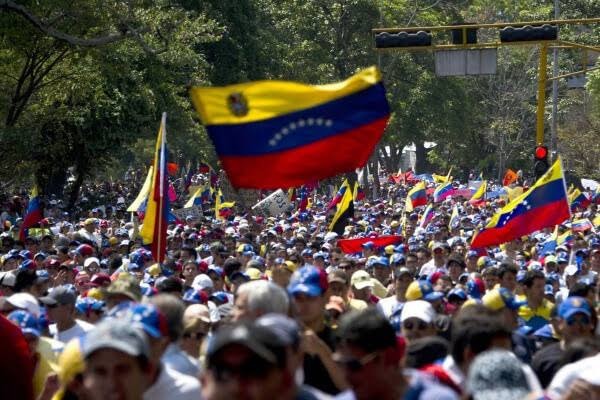
Those events accelerated sharply after the disputed presidential election of July 28, 2024. Human Rights Watch documented that Venezuela’s Electoral Council declared Maduro the winner despite substantial contrary evidence, prompting international observers to question the results outright. What followed was branded internally “Operation Knock Knock“, a nationwide campaign of intimidation in which security forces and colectivos killed twenty-four protesters and bystanders and arbitrarily detained thousands, including children and foreign nationals, on vague charges like “incitement to hatred”. Detainees described beatings, electric shocks, asphyxiation, and solitary confinement in cramped punishment cells; women reported coercive sexual violence and what the UN Fact-Finding Mission called possible forced prostitution. By September 2025, that Mission had documented 135 arbitrary arrests in just four months, alongside continued torture in prisons and unofficial “safe houses”.
This is where the story after Maduro’s removal becomes genuinely unsettling, and where I think most coverage misses the point. Optimists hoped his ouster would flip a switch. Instead, the Fact-Finding Mission recorded at least 87 new politically motivated detentions in the weeks immediately following January 3, proof, in the Mission’s own words, that “the practice of silencing dissent persists under the current Government”. Senior officials once identified as responsible for crimes against humanity remain in the security forces and executive branch, and reshuffled cabinet posts have mostly gone to other long-standing regime figures rather than reformers. An Amnesty Law passed on February 20, 2026 did lead to some prisoner releases, but rights monitors criticized it for being adopted without public consultation and for lacking any real mechanism for truth, accountability, or reparation. Estimates of remaining political prisoners have ranged from roughly 380 to over 1,000, depending on the source and moment, with acting President Rodríguez announcing in April that the release process would simply “come to an end” leaving hundreds unaccounted for.
Meanwhile, the humanitarian floor kept collapsing beneath ordinary Venezuelans. Roughly a fifth of the population is estimated to face undernourishment, and hospital surveys found emergency-medicine shortages reaching over a third of facilities even before more recent shocks. Then, on June 24, 2026, two earthquakes struck less than a minute apart, devastating the capital and central coastal states; by mid-July the confirmed death toll had passed 4,400, with thousands still missing and the government’s response widely condemned as grossly inadequate. Disturbingly, watchdogs warned that intelligence and counterintelligence units with no disaster-response mandate were deployed into the relief effort, the same institutions implicated in years of political persecution, now standing between earthquake survivors and aid.
None of this happens in a vacuum. Close to 8.7 million Venezuelans now live outside their country, and neighboring states are tightening rather than loosening the door: Colombia’s own immigration crackdown is now accused of threatening the rights of the Venezuelans it hosts, according to WOLA. Washington’s role, too, is far from neutral; the UN Mission itself concluded that the January 3 operation violated international law, even while acknowledging reasonable grounds to believe Maduro bore responsibility for crimes against humanity. Both things can be true at once, and that discomfort is precisely the point: an illegal seizure of a genuine human-rights violator does not, by itself, produce justice. It is also worth being honest about what was competing with justice as a motive. Venezuela sits on the largest proven crude oil reserves in the world, and within hours of Maduro’s removal, Trump was already speaking of getting the U.S. to “run” Venezuela and open its oil to American companies, framing it at one point as recovering “stolen” oil. Days later, his administration unveiled an energy deal granting U.S. firms access to Venezuelan crude, and Trump later told the UN General Assembly that “the spoils go to the victors”.
What Venezuela needs, and has needed since long before January 2026, is not a change of face but a change of structure, an independent judiciary, demilitarized security forces, and unfettered access for UN investigators, none of which currently exist. Until that repressive machinery is actually dismantled rather than merely handed to new operators, removing one man from power will remain, at best, an incomplete beginning.
Edited by Professor Juan Pablo Luna.