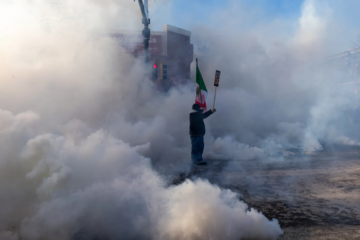

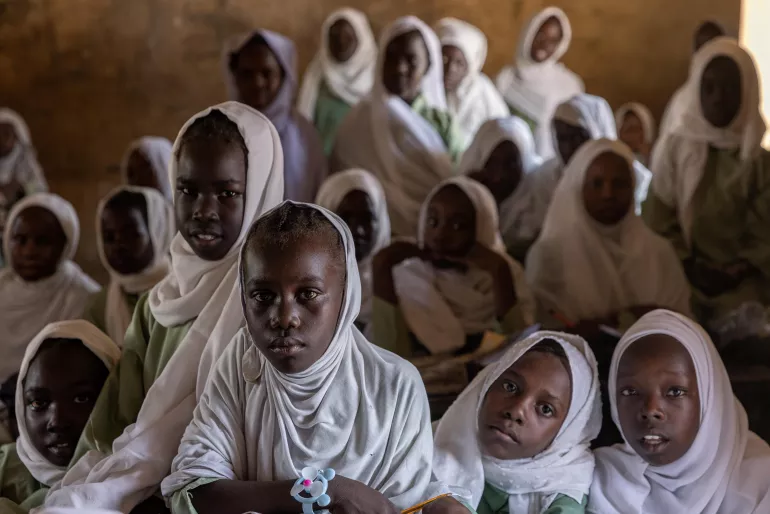
The conflict that began in April 2023 as a power struggle between Sudan’s army and the Rapid Support Forces has escalated into a direct assault against childhood. Across Sudan, gunfire has replaced the morning bell. For nearly 500 consecutive days, over eight million school-age children have been expelled from classrooms, according to Save the Children and UNICEF. This represents one of the longest sustained education closures recorded in the modern era. Sudan is at risk of losing an entire generation.
The war has systematically dismantled Sudan’s educational infrastructure. Thousands of schools sit empty due to armed group occupation or conversion into shelters for displaced individuals and communities. Teachers have gone unpaid for months, and resources have been looted. The right to learn, enshrined in Article 28 of the Convention on the Rights of the Child, has been suspended by force.
Each statistic embodies a life. Consider the boy in Khartoum who spends his days scavenging rubble instead of studying, his school reduced to an empty shell. Think of the teenage girl in Darfur who should be learning critical thinking, as well as the skills she may need to one day rebuild what war has destroyed, but instead faces only the endless present of survival; a child with a disability, already marginalized within Sudan’s fragile education system, now rendered invisible in overcrowded displacement camps where temporary learning spaces, when they exist at all, are rarely equipped to accommodate their needs. Such are the collateral consequences of war.
Furthermore, this is not solely an education crisis; it is a human rights disaster. The Convention on the Rights of the Child, ratified by Sudan in 1990, guarantees every child the right to education. Article 28 states that parties must recognize a child’s right to education, and that they shall achieve this right progressively and equally. Article 29 states that education shall be directed to the development of the child’s personality, and mental-physical abilities to their fullest potential. In Sudan today, those articles are obsolete. The state, consumed by internal conflict, has abandoned its obligations. Institutions are occupied with impunity, as the international community stands by and watches.
Education cannot be deferred until stability returns. Schools are sanctuaries, not simply for learning, but for the psychosocial support through structured routines, and physical safety from the dangers of the streets or displacement camps. The Inter-Agency Network for Education in Emergencies has documented that safe learning spaces reduce children’s vulnerability to recruitment and exploitation. The common failure to implement these frameworks leave children stripped of opportunity, as well as the foundational scaffolding that holds a childhood together.
A generation denied education is a generation without the capacity to build. These children, when they reach adulthood, are expected to reconstruct this society, to negotiate and draft solutions, to rebuild institutions. How may they do so without the rudimentary knowledge and skills which education provides?
The moment could not be more critical and threatening. The rest of the world is continuing to accelerate exponentially into an era defined by artificial intelligence, automation, and digital economies. The gap between those who have access to education and those who do not has always been an opportunity gap, but in 2026, that gap has become a chasm. As children in stable countries learn to code, Sudan’s children fall further behind with every passing day. They are drastically being left behind. This present reality, paired with the emergence of AI, is prominently defining a socio-economic shift of our era. Those left behind now may never catch up.
- The protection of schools under international humanitarian law must be enforced. The occupation of educational facilities is a violation which requires accountability. The United Nations Security Council Resolution 2601, condemns attacks on schools and calls for measures to deter such.
- The establishment of temporary learning spaces necessitates urgent and sustained investment. Organizations such as UNICEF, Save the Children, and local partners are working to create pathways to learning, but these efforts remain severely underfunded. Education in emergencies programming, remote instruction, and teacher training for crisis contexts must be scaled.
- The international community must recognize that education in emergencies is an investment in future stability. Education is one of the core pillars to restoring structure and resilience. Denying children education is to deny them the tools to survive, and rebuild.
Sudan’s children do not need our sympathy. They need our adherence to the framework we claim to abide by. They need schools reopened, armed groups out of classrooms, and learning spaces protected under the laws of war. They deserve their access to their futures restored.
Edited by Grace Neely.