
Written by Ella Rosenthal, Bahar Naghavialhosseini, and Ava Afrashteh.
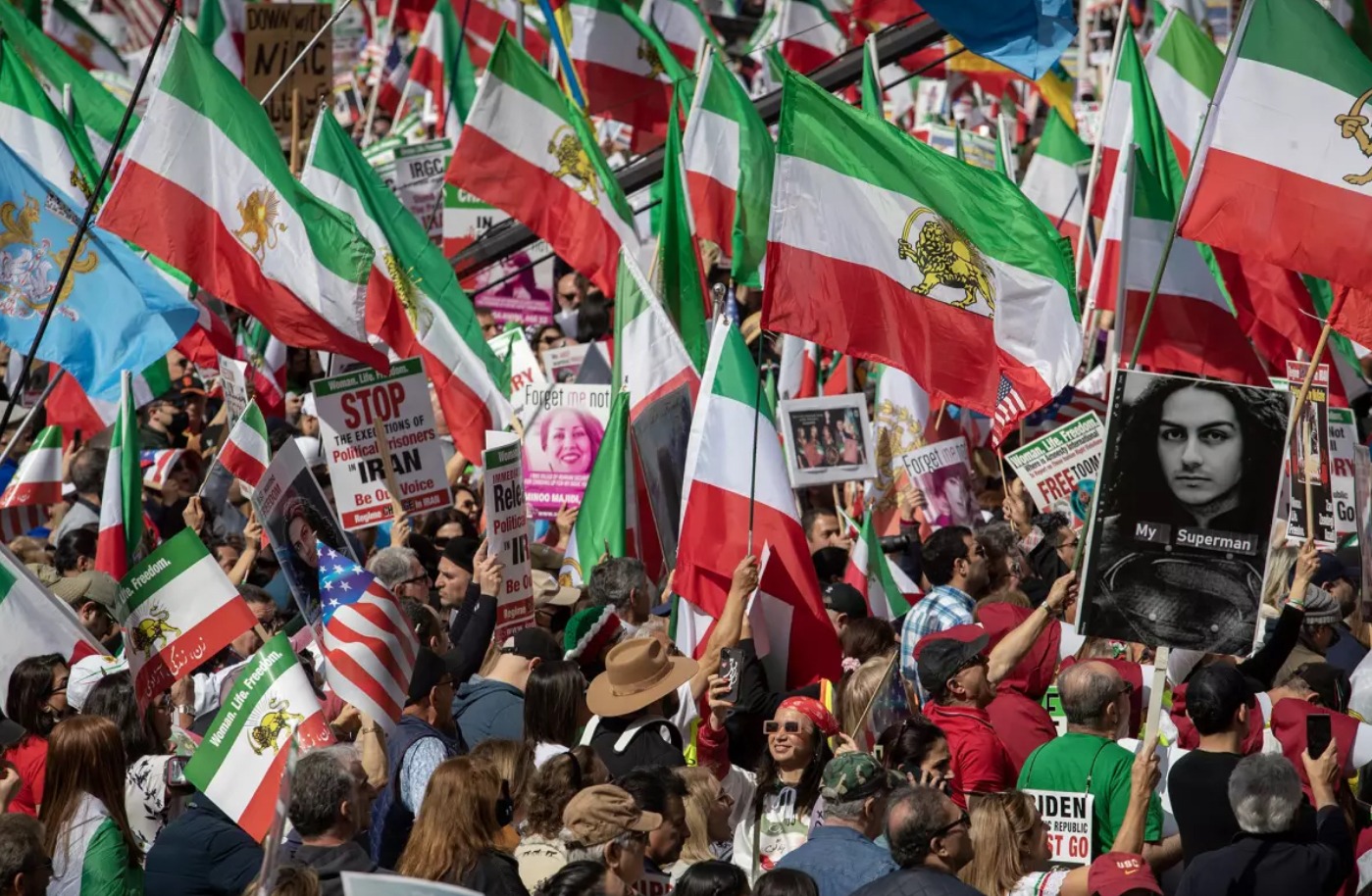
What began in late December 2025 as demonstrations driven by economic desperation and political exhaustion has escalated into one of the most violent confrontations between state and society in the history of the Islamic Republic. Iran is no longer simply protesting; it is grieving, resisting, and demanding change all at once. Across the country, citizens armed with little more than courage have faced a state response defined by live ammunition, mass arrests, and enforced silence through a sweeping internet blackout.
The protests erupted on 28 December 2025 after a sharp collapse of Iran’s currency, which intensified soaring inflation, shortages, and already deteriorating living conditions. What began with strikes by shopkeepers in Tehran’s Grand Bazaar quickly spread into nationwide demonstrations calling not for reform, but for an end to the Islamic Republic system itself. According to the UN Fact-Finding Mission on Iran, protests reached all 31 provinces, cutting across class, region, ethnicity, age, and gender. Analysts note that this breadth marks a decisive shift: Iranians are no longer negotiating with power; they are rejecting it outright.
Iranian authorities responded with what Amnesty International describes as an “unprecedented deadly crackdown.” Verified videos and eyewitness testimony show security forces, including the Islamic Revolutionary Guard Corps (IRGC), Basij militias, police units, and plain-clothes agents, firing rifles and shotguns from streets and rooftops, frequently targeting protesters’ heads and torsos.
The most lethal phase occurred on 8 and 9 January 2026, when mass killings took place across multiple provinces. Amnesty International and medical sources describe this period as the deadliest episode of repression in decades. Determining the actual death toll is intentionally difficult. However, medical professionals interviewed by The Guardian and Time estimate that the number of people killed during those two years may exceed 36,500, based on hospital baselines, morgue overflows, and eyewitness testimony. Doctors reported bodies removed outside official forensic channels and widespread fear preventing the injured from seeking hospital care. Victims include protesters, bystanders, and, in some cases, children. Among them was Ali Mohammad Sadeghi, who was only two years old when he was shot and killed during the crackdown. Human rights organizations have documented grave abuses during mass arrests, including reports of sexual violence against detained women and the refusal to return bodies to families. In other cases, when families sought justice, authorities reportedly demanded payment for the release of their loved ones’ bodies, charging per bullet removed. Iran International estimates that at the current exchange rate of approximately 1,450,000 rials to the U.S. dollar, these payments amount to roughly $480 to $1,720, in a country where the average monthly income is under $100, rendering even mourning an impossible luxury for many families. Moreover, doctors are being arrested in Iran for helping save the lives of some of the tens of thousands injured during Iran’s brutal crackdown on anti-regime protests, with at least a few surgeons now at risk of being sentenced to death. Among them, an Iranian surgeon, Alireza Golchini, 52, from the central city of Qazvin, has been charged with “moharebeh” (waging war against God), which carries the death penalty.
Each statistic hides a life: a teenager who never returned home, a father killed while buying bread, a woman shot simply for standing in the wrong place at the wrong moment. Some of these lives are remembered not only through numbers, but through the words they left behind. In the appendix, readers can find fragments of their final messages, recorded testimonies, and personal stories, small windows into who they were and what they believed a free country could be.
As the crisis intensified, the state revived familiar tactics, but this time with broader and more sustained force. BBC News reports that Iranian authorities have imposed sweeping internet and communications blackouts across much of the country. These shutdowns disrupt mobile networks, messaging apps, and social media, cutting off the tools used to organize protests and share evidence of abuse. CBC News notes that these blackouts are not only about controlling dissent; they are about controlling reality itself. Families go days without knowing whether loved ones are safe, arrested, or dead. Hospitals and emergency services are affected, worsening the humanitarian toll. In practical terms, blackouts create a landscape where killings can occur without witnesses, videos never leave the country, and fear spreads faster than information. Authorities have moved to suppress dissent through expedited trials. BBC, AP, and Euronews report cases in which protesters were sentenced to death within days of arrest, often without access to independent legal counsel. Authorities frame the uprising as an armed conspiracy rather than a popular movement, giving the state justification for lethal force and mass repression under the banner of “national security.” This framing is deliberate. By labelling protesters as “terrorists,” the state not only criminalizes dissent but also lays the groundwork for further executions.
Despite the ferocity of the crackdown, analysts argue that the protests reveal a profound legitimacy crisis. Surveys cited by The Conversation indicate a clear majority of Iranians reject the theocratic system established in 1979 and favour a secular, democratic alternative. European officials and regional observers describe Iran’s leadership as facing unprecedented internal pressure, even as it retains powerful tools of repression. The central question is no longer whether dissent exists, but how long the state can sustain control through violence alone.
For ordinary citizens, the consequences are devastating. As CBC News reports, daily life is defined by uncertainty: sudden school closures, workplace disruptions, shortages, and constant fear of arrest and mass executions. Many families avoid hospitals, afraid that injured protesters might be detained instead of treated. Parents teach their children which streets to avoid. People delete messages before sending them. Funerals are held quietly, if at all. Hope exists, but it is fragile.
Iran’s crisis does not unfold in isolation. BBC News notes that neighbouring countries are increasingly worried about regional instability. Prolonged turmoil could trigger refugee flows, border tensions, and economic disruptions across the Middle East. Western governments fear that Iran’s internal crisis could reshape regional alliances and conflicts, further complicating diplomatic engagement. However, the European Union has taken unprecedented steps in response to Tehran’s deadly crackdown, including escalating sanctions and renewed calls within EU institutions to formally designate Iran’s Islamic Revolutionary Guard Corps (IRGC) as a terrorist organization. While debates within the EU continue, Canada moved ahead in 2024, officially listing the IRGC as a terrorist entity, one of the clearest signals yet of where Ottawa stands in the face of Iran’s repression. These decisions make visible what is no longer neutral: governments are being pushed to choose sides, and they stand with the people of Iran.
Iran now stands on a historic fault line. Behind every statistic is a life cut short, a family left searching, a society pushed to its limits. As protesters themselves have said, they know the risks, and continue anyway.
Silence, in this moment, is not neutrality. It is against humanity.
How You Can Help:
- Amplify the voices of Iranian civil society and human rights defenders
- Share verified reporting from credible outlets
- Support organizations documenting abuses and preserving evidence
- When people are silenced, the world must not be.
Edited by Callixte Baron.
Appendix
Last Words of the Victims Killed by the Islamic Republic
As this uprising grows beyond numbers, each person lost is more than a statistic.
Each name carries a story.
Each life holds a dream, a hope, a future imagined for a free country.
These words belong to people who are no longer here to speak for themselves. Their voices were taken by violence, but their truth was not erased. What follows are their final messages, sent, spoken, or remembered, left behind in the moments before their lives were stolen.
Their last words do not belong to history; they belong to the present.
They are offered here not for spectacle, but for memory, truth, and justice.
“I’m connected for a moment, and I just want to write: Woman, Life, Freedom. Forever.”
— Zahra Bahlolipour
“Dad, don’t worry. I love you.”
These were the last words of Ilya Dehghani, 19, who was killed in Iran.
“Sepehr, where are you, my son?”
A father cried out while searching for his child among the bodies of protesters killed in Iran.
“Mani, go. I’ll come.”
Mani’s father cried while holding the body of his son after he was killed.
Melina Asadi, a 3-year-old child from Kermanshah, was shot dead by Islamic Republic forces in front of her father.
Ali Mohammadsadeghi, a 2-year-old child from Dehagh, Isfahan, was killed on January 9 after being struck in the side by live ammunition fired by Islamic Republic forces while sitting on his father’s shoulders. His family was forced to keep his small body in the snow overnight and bury him the following morning.
Matin Abbasi, 19, was shot and killed by Islamic Republic forces. According to his family, he was struck from behind by two bullets, one above his heart and the other in his side. After being wounded, he was taken to three different hospitals, none of which agreed to admit him. He was eventually brought to a clinic, where his family was informed of his death.
Babak Sadeghi Mohseni, 30, was killed in Tehran by Islamic Republic forces. His mother said:
“Don’t cry. He went for the freedom of our homeland. He chose his path.”
Andisheh Gharibi, a 38-year-old woman from Mashhad, was killed by Islamic Republic forces. Her body was taken by security forces. Days later, her family was informed that she had been buried in Block 30 of Behesht-e Reza Cemetery.
Asal Shakeri, a 23-year-old cancer survivor from Tabriz, was shot and killed by Islamic Republic forces.
Rouhollah Setareh Moshtari had become a father just three days before he was killed by Islamic Republic forces. He was shot in the city of Chenaran. His final photograph shows him with his newborn baby.
Eva Rahmani Rad, 20, was killed by live ammunition in Tehran.
Masoud Yousliani, 32, was killed by Islamic Republic forces in Isfahan. His family spent a week searching for his body among the corpses at Gharazi Hospital. When they finally found him, even his gold necklace had been stolen.
Kimia Kamyab, 17, was shot and killed by Islamic Republic security forces.
Diana Bahador, a 19-year-old motorcyclist and influencer, was shot and killed by Islamic Republic forces.
Faramarz Golestani was killed in Fardis, Karaj, while attempting to rescue a wounded woman. He was first struck with shotgun pellets and, while still trying to help her, was shot directly with live ammunition, killing him on the spot.
Bahar Hosseini, a 3-year-old child, was shot and killed by Islamic Republic forces in Neyshabur.
Hamid Mazaheri, a nurse at Milad Hospital in Isfahan, was killed by Islamic Republic forces. He participated in street protests and provided medical care to the injured.
Hesam Elmi, only 19 years old, was killed by Islamic Republic forces in Karaj. He lost his mother as a child, and his father had abandoned him.
Anila Abutalebian, an 8-year-old girl from Isfahan, was brutally killed by Islamic Republic forces on Friday, January 8. She was traveling by car with her mother when gunfire erupted. After her mother attempted to change their route, security forces unleashed a hail of bullets on their vehicle, killing Anila.
Mina Amirzadeh, born in 2000, was shot dead by Islamic Republic forces while riding on the back of her father’s motorcycle. She was shot in the throat, fell from the motorcycle, and died in her father’s arms.
Ali Mohammaddoost, 22, was killed on January 9 in Chalus, Mazandaran. He was a rapper and clothing seller who lived alone and had no close family. For several days, no one came to claim his body.
Arefe Beigi, 20, was shot in the head and killed by Islamic Republic forces in Isfahan.
Arnika Dabbagh, 15, from Gorgan, was a champion swimmer. She was shot in the back by Islamic Republic forces, the bullet striking her heart. Her dream was to visit London, a dream that will never be fulfilled.
Sogand Amani, 22, was shot and killed by Islamic Republic forces.
Parisa Lashkari, 30, was first wounded and then executed with a final bullet by Islamic Republic forces in Nurabad Mamasani. Her daughter, Aysan Zarei, now visits her grave in longing.
Freshteh Rajabi, 39, a mother of two, was shot in the chest on January 19 on Qazvin Street in Tehran by Islamic Republic forces. Her body was returned to her family three days later under intense security pressure. She was buried at night under strict security measures.
Bahar Shadmehry, 17, was shot and killed by Islamic Republic forces.
Alireza Rafiei Rad, a 20-year-old electronics student, was killed in Tehran after armed forces shot him in a major artery with live ammunition.
Iranian soldiers have also been sentenced to death for the “crime” of refusing to fire on their own people.
Ghazak Ghalandari, 16, was shot and killed by Islamic Republic forces.
Borna Dehghani, 18, was shot by Islamic Republic forces in Karaj and died in his father’s arms.
Sam Afshari, 16, was shot in the head at close range with live ammunition in Karaj.
“Dad, I’m burning. I’m burning.”
— Negin Ghadimi
“Look at the sky. There was a song that said: Dad, it’s time to say goodbye,
but don’t tell Mom anything. I can’t take the pain anymore; my throat is choked with sobs. Dad, if I go, know that all of this was for the future. I have only one wish: to see Iran free one day.”
— Ali Nouri
Robina Aminian, a 24-year-old Kurdish student at Tehrad Shariati Tchnical University, originally from Nowdasht in Kermanshah Province, was killed by direct gunfire by the Islamic regime forces during protests in Tehran. Islamic republic forces initially refused to hand over her body to her family. After many repeated follow-ups, relatives were taken to the location where her body was being held. The Islamic regime authorities imposed severe security measures and prevented any burial or morning ceremonies from being held at their home.