
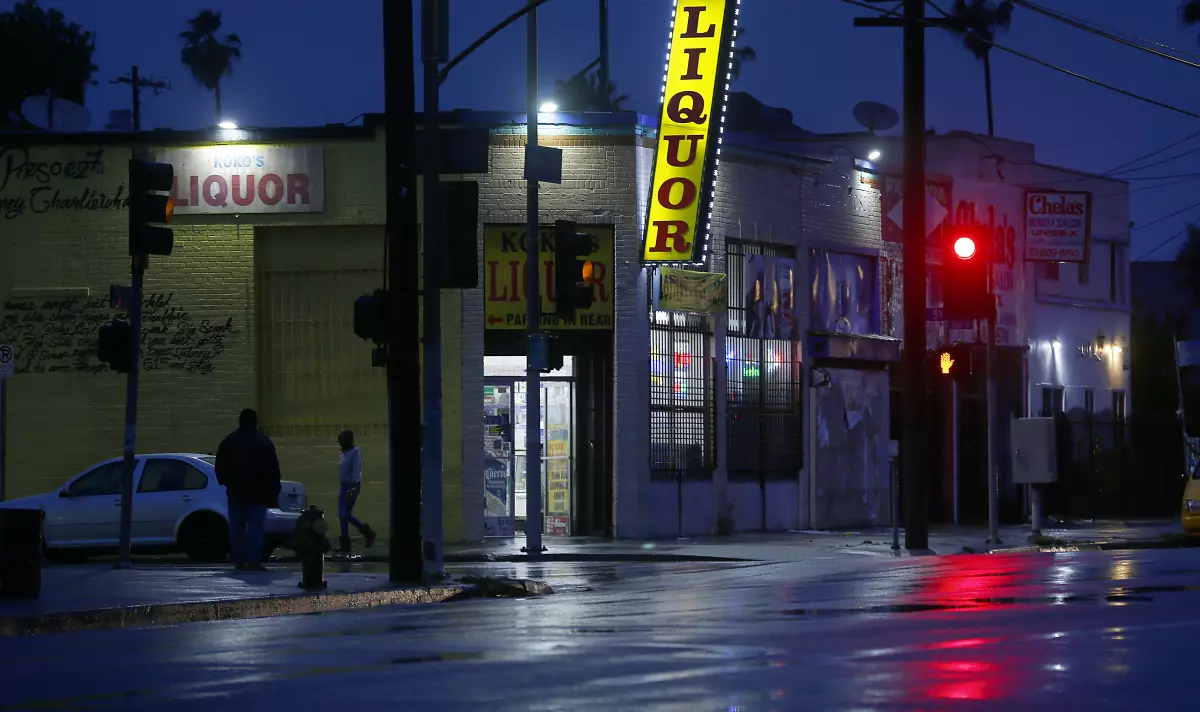
Painted onto the Open Arms Community Center of Figueroa Street is the phrase “the greatest good is what we do for one another,” standing in stark contrast to the pervasive sex trafficking that defines much of the area. Popularly known as “The L.A. Blade,” the stretch along Figueroa Street from 48th to 73rd is infamous for its high levels of crime and sex trafficking.
Since the COVID-19 pandemic, the number of sex workers in the area has drastically increased. The Blade is the center for sex work in Southern Los Angeles, where the most critical issue is the trafficking of minors stemming from the city’s struggle with foster care. The system faces the major issue of the “foster-to-homelessness pipeline,” where instability, homelessness, violence, and insufficient mental health care rampage the youth in foster care. In 2023, Los Angeles County was hit with a class-action lawsuit from a public-interest law firm, the Alliance for Children’s Rights, alleging that it had failed to provide “safe and stable” placements for minors in its care. Cases in this filing included that of Ocean, discharged twice from housing for being pregnant and later incarcerated, and that of Junior, kicked out of a housing program for having a messy room and ending up homeless after short stays in hotels. Sarah Hunter, the lead author at RAND, a nonprofit research organization, asserts that “young people with foster care involvement are at extreme risk of experiencing homelessness, despite California’s investment to extend foster care benefits up to the age of 21.”
It is under these conditions that L.A.’s Blade emerges as the outcome of systemic neglect. Women as young as 11 are reported to have worked in the area. This reality was brought to light in a New York Times case study featuring a 19-year-old named Ana, who told a reporter that she began working on Figueroa at age 13, while her sister was only 11. They were foster kids who had escaped abusive homes and recruited by a friend, who dropped the two off at a motel on Figueroa, handed them bikinis, and told them they needed to collect $800 each by the next morning.
The prostitution scene is made up of young girls, the Hoover Gang, and buyers. The Hoovers are a criminal street gang that emerged in the late 1970s, later becoming part of the Westside Crips group. A report by the Sun observed that girls were heavily tattooed and wore long fake acrylic nails with hair extensions and make-up to allow them to appear much older than they were. The area caters to the sex market, with stores and motels profiting from the known reality. Its main clothing store, named “Sluts,” sells micro-mini skirts, faux fur coats, and platform heels to the women who work in the vicinity. Women have flat rates for times, where motel rooms are already allocated to specific workers and booked. One motel, called The New Gage, charges hourly rates, which offers sex workers a safer space than the street where they are vulnerable to assault and arrests.
Combined with the issues of the foster care system, the Hoover Gang is also largely responsible for the problems on Figueroa. In August of 2025, six suspected members were arrested on federal charges for allegedly running a sex trafficking operation along the Figueroa corridor. Court documents state that the criminals acted as pimps by managing victims through violence and humiliation and by renting motel rooms, where money from commercial sex dates were required to be given to the pimp. These six members include Amaya Armstead, also known as “Lady Duck,” the de facto leader of this set of the gang who allegedly orchestrated the trafficking of a 14-year-old girl. Charged with one count of conspiracy to violate the Racketeer Influenced and Corrupt Organization (RICO) Act, the takedown of these perpetrators marks the first major breakthrough in destroying The Blade’s notorious prostitution operations. Los Angeles Police Chief, Jim McDonnell, states that “the victims in this case — many of them minors, runaways, or from the foster care system — were preyed upon by individuals who sought to profit from their pain.”
Law enforcement has trouble addressing the issue due to Senate Bill 357, known as the Safer Streets for All Act (2022). The Bill did not repeal laws against prostitution, which is already illegal in California, but rather stopped police from being able to arrest people for loitering with the intent to engage in prostitution. The goal of this was to prevent police from subjectively harassing sex workers and LGBTQ+ people when they are making arrests, which had previously been done based on clothing and make-up. An unforeseeable consequence of this was officers losing the ability to stop groups of girls that might be minors on Figueroa, now having to prove that they have proper reason to believe a girl is underage prior to stopping them. The breakthrough of Hoover Gang member arrests saw progress, although significant gaps remain.
Young girls remain victims of The Blade in Los Angeles every day. Despite arrests, the reality of Figueroa continues to reflect systemic neglect, particularly that in the county’s foster care institution. The stories of girls at the intersection of foster care instability and sex trafficking are a reminder that the “greatest good” can not just be painted on walls, but must actively be addressed.
Edited by Kirit Ghumman and Norah Nehme.