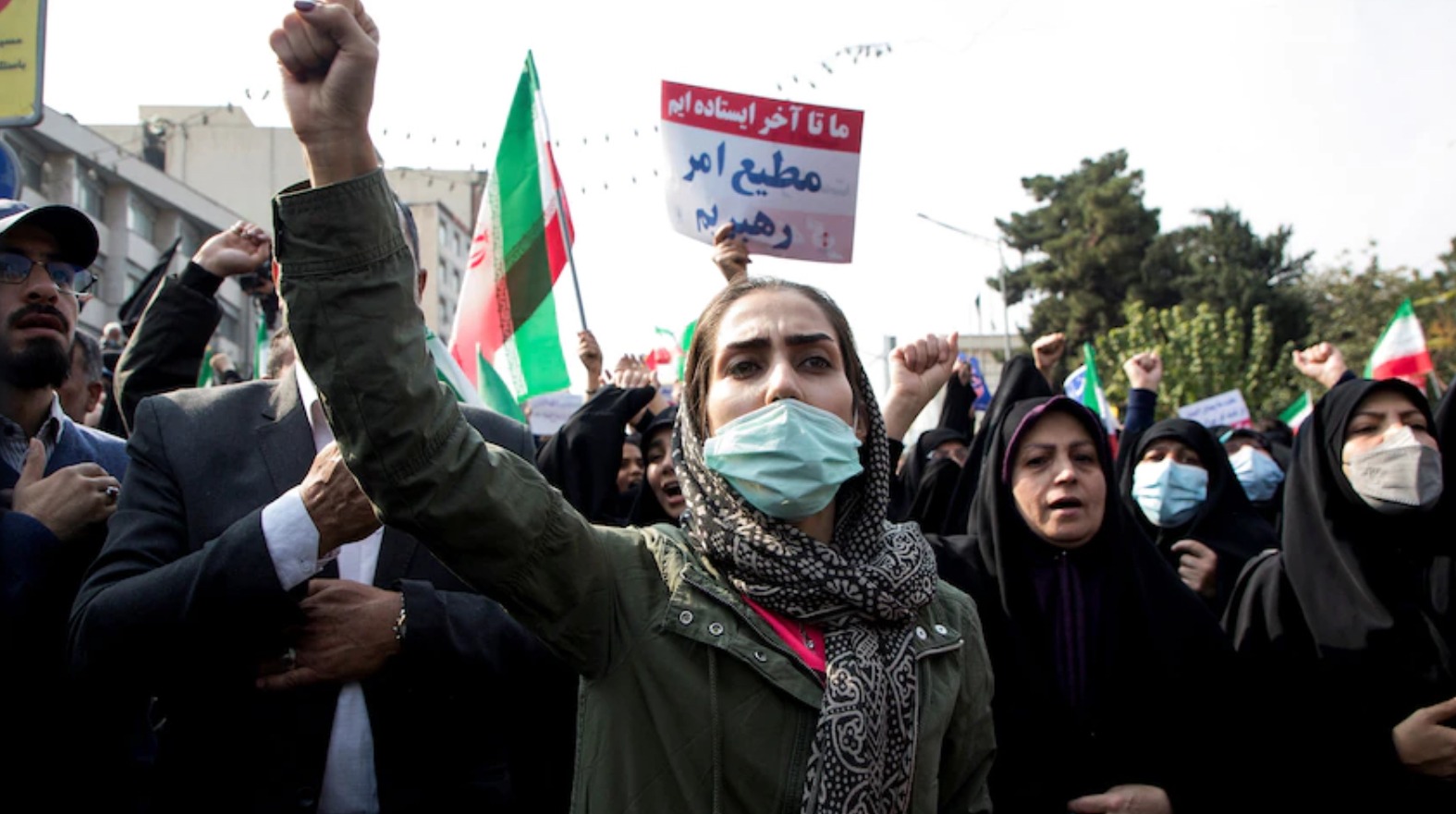

The situation regarding women’s rights in Iran has remained precarious and has now gone beyond the morality police, once very visible, to an invisible online smart control system using digital means. The United Nations Human Rights Office has reported that the Iranian authorities have “escalated surveillance” as one of the many steps in their systemic large-scale oppression of women. Thus, Iranian women’s resistance to the control of their bodies and the repression of their rights should now be seen equally through the lens of surveillance technology, along with that of coercive policing.
The use of apps, license-plate readers, drones, smart cameras, and facial recognition systems, specifically for the enforcement of the dress code, is one of the most remarkable things in this new age of monitoring. The Stimson Center has reported that the Iranian government is using IMSI collectors (which intercept mobile signals) alongside surveillance cameras and ID card readers to pinpoint women’s identities, movements, and friends. Simultaneously, the state-supported mobile application, Nazer, provides police and ordinary citizens with the opportunity to report violations of hijab laws by uploading the perpetrator’s car plate, along with the time and place of the alleged infraction.
The rationale behind this technology-based monitoring is very simple: the regime is attempting to create a permanent environment of fear and control in women’s daily lives through mass surveillance rather than the sporadic crackdowns. The Guardian reported about a 25-year-old woman from Tehran who got an SMS from the government detailing her car’s license plate, the time, and the location of the “unveiled” visit, and finally cautioned that the vehicle would be towed if any more violations occurred. Through such a method of communication, the government is able to turn what could seem like occasional police action into a powerful and highly sophisticated surveillance system in which every movement and every step out of line is noted and possibly punished.
This development raises three major issues from a human rights viewpoint. To begin with, these monitoring devices seriously violate the right to privacy. A woman can no longer take a casual stroll or travel in a car without the possibility of being tracked, reported, and punished. The impact of this on freedom of movement and freedom of expression, especially for women, is profound because constant surveillance creates constant fear, limits autonomy and forces people to modify or suppress their behavior simply to avoid potential consequences. Secondly, this monitoring system specifically targets women due to its association with the detection of the compulsory Hijab Law. The government is subtly asserting that women’s bodies are to be publicly displayed and even corrected. Lastly, the application of such technology results in the shifting of the enforcement burden to other members of the community. Apps invite neighbours and even strangers to play the role of monitors, thereby spreading social control. According to Stimson, women now experience not only state observers but also civilian accomplices whose accounts are uploaded to official databases.
This technological repression can not be considered an isolated incident. The Stimson study indicates that after three years of Mahsa Amini’s death in custody, women are still opposing by going in public without a veil, posting pictures on the internet, and resisting the regime’s actions aimed at making women compliant. The increase in digital surveillance is not, in this respect, a clear-cut case of power, but rather a symptom of the classic authoritarian problems. The regime is apprehensive that the very basis of its rule is slipping and hence, prefers to increase its ability to spy rather than to repress openly.
Nonetheless, the technology is not neutral, per se. The Guardian reports that the Iranian government uses aerial drones in public places, facial recognition in educational institutions, and real-time SMS campaigns for monitoring adherence to the hijab. The use of these tools is not limited to public places but also includes shopping malls, taxis, ambulances, and private vehicles, making women feel as though they are always being watched. However, even The Guardian has pointed out that the hijab rule is still being defiantly ignored by many women, revealing the limits of surveillance when it faces mass resistance. The situation resulting from constant monitoring can be described as gender-specific digital apartheid. The female population acts as the specific target and therefore suffers the consequences, while male individuals are mostly free from the impact of the situation. The mental suffering caused by this situation is huge. According to The Guardian, students under surveillance systems on campus feel more stressed than before. It is not just a matter of clothes, but rather the retraining of women to believe that their bodies belong to the state.
Additionally, the regime’s dependence on technology underscores how authoritarian it has become. Iran’s government has shifted from a time where it could only use physical force, to a time characterized by drones, cameras, license-plate readers, and apps as its tools of controlling women’s bodies and movements. The Stimson Center states that this change signals the state’s need to redirect the public displeasure caused by mass arrests onto a more silent and less visible form of repression. When it comes to human rights, the woman monitoring practice in Iran is, among others, a violation of equal treatment, public privacy. Together with movement and speech, and finally, the right to be free from discrimination. According to the BBC and other sources, women in Iran are no longer merely fighting the hijab Law, but have also taken steps against the whole technological infrastructure that is aimed at liberating them from the grip of their autonomy.
Edited by Callixte Baron and Emma Ristic.